
Aviation Watchdog Report
JUNE 2026 Edition
Drones, or Unmanned Aircraft Systems (UAS) Aren’t Going Away
Frontier Airline Jet Strikes Pedestrian at DIA
In The News

Receive the Newsletter in your Inbox

Cover Story

Why is Accountability so Illusive?

History has shown that man-made disasters occur due to factors that are controllable with fundamental safety initiatives. Basic controls placed on production, maintenance, operations, and quality will do the job if implemented as intended. Therein lies the rub—those, dare we say, “common sense” steps are always available yet often not fully embraced. The failure to protect life and property is maddening to those who understand safety.

Examples of these tragedies are numerous and easy to find. They occur in all industries, not just aviation. But they all have common causes that start and end in a disregard for safety procedures. Instead, they feature a focus on expedience, convenience, profit, or a combination of all. Additionally, they all result in the loss of life and significant property damage yet in the end no one is held accountable. Here are a few examples to consider:

March 25, 1911 - The Triangle Shirtwaist Company fire. 146 people died as a fire spread through the 8th floor of the building. The shop was filled with cotton scraps and dust, exits were locked to prevent unauthorized breaks, and a flimsy fire escape collapsed. The owner was charged with manslaughter but acquitted and the company received more insurance money than the fire cost them.  
April 15, 1912 - The HMS Titanic sinks after striking an iceberg. 1,500 lives lost. No one was charged criminally or held accountable. The British inquiry exonerated the White Star Line calling the sinking “an act of God.” The U.S. inquiry was harsher in its criticism, but no charges were filed.
December 2, 1984 - Union Carbide India Limited, Bhopal India. A chemical release that resulted in 3,000-5,000 immediate deaths with an estimated 15,000-25,000 deaths over the ensuing years. The causes included refrigeration systems shutdown to save money, non-functional safety systems, substandard maintenance, and employees were not trained in emergency response. Union Carbide settled with the Indian government, but no executive was charged. A few local managers were convicted of negligence in 2010 (yes, 26 years after the disaster), but none served significant prison time.
April 20, 2010 - Deepwater Horizon offshore oil drilling rig explosion and sinking. 11 workers died, 17 injured. This was the worst petroleum accident in history spilling an estimated 134 million gallons of oil into the ocean 40 miles from Louisiana. Several companies (BP, Halliburton, and Transocean) paid significant fines for environmental crimes, destroying evidence, and poor maintenance practices. BP also pleaded guilty to 11 counts of manslaughter; however, no individuals were ever prosecuted or imprisoned. Ironically, the Deepwater Horizon was being honored on the very night it exploded — and the specific award was the “Transocean Safety Award for Excellence.”

These are extraordinary examples of how people in charge are rarely, if ever, held accountable for their failure to protect employees, subcontractors, or end users. But certainly, aviation has a better record in this regard, right? Unfortunately, aviation has its share of tragedy with no individual accountability. Again, a few examples:

1954 - Two in-flight breakups of de Havilland Comet jetliners resulted in 56 fatalities. The failures were caused by fatigue cracking of the fuselage originating from rivet holes and square corners from ADF window cutouts. The fuselage skin was made extremely thin to save weight. Despite clear design errors that resulted in fatal crashes no individuals at de Havilland or regulatory agencies were held accountable.
1972, 1974 - Two DC-10 cargo door failures resulting in one serious incident and one crash, 346 fatalities. Several design problems contributed to the door failures including an outward opening door (that must resist pressurization forces), lightweight aluminum latching mechanism, and the door could appear locked when it wasn’t. After the first incident, the FAA accepted a McDonnell Douglas service bulletin for a recommended change rather than insisting on a design change. Then Turkish Airlines 981 crashed. McDonnell Douglas blamed ground crews and maintenance and had fought redesign until after the fatal crash. No executive was held responsible and only relatively small civil payments were made.
2018, 2019 - Two new Boeing 737 MAX aircraft crashed resulting in the loss of 347 lives. Critical design and manufacturing errors involving AOA sensors and MCAS brought down the two planes. The FAA failed to act after the first crash despite knowing the aircraft had serious safety problems. Subsequent investigations determined there was a criminal coverup (Boeing pleaded guilty to defrauding the FAA) and recertification of the MAX was required. Despite the guilty plea the DOJ subsequently agreed to a non-prosecutorial agreement. No one at Boeing has been held accountable despite the significant loss of life. The MAX continues to fly with a long list of design and manufacturing defects.

There are many more examples, but the overall pattern is clear. Accountability is sacrificed to protect the system. These tragedies span over 100 years, yet the accountability failures are nearly identical. Unless the system is changed worldwide these shameful disasters will continue to happen with impunity. Civil settlements and reputational harm may occur but individuals who make decisions that result in tragedy will not be held responsible.

Corporations are protected in many ways. Responsibility is distributed throughout a large company with executives, managers, engineers, regulators, factory workers, and subcontractors all having a role to play. But this also makes it easy for those people to say, “it wasn’t my decision” or “I only played a minor role in a national project.” This makes it very hard to prove any criminal intent or individual negligence. In rare cases a CEO will take responsibility and may even be fired. But there will likely be no further consequences, and the golden parachute is often a staggering payoff.

Logically we should be able to depend upon regulatory agencies to ensure safety standards are met and these disasters are prevented. But that landscape is changing as regulators are relying more on the companies they regulate. In the case of the FAA, perhaps it simply does not have enough engineers, technical experts, or funding to regulate a large manufacturer such as Boeing. On the other hand, perhaps the FAA doesn’t have the strong leadership or the congressional support it needs to aggressively enforce the regulations. Boeing and the FAA have agreed that the Organization Designation Authorization (ODA) program is sufficient to ensure safety in design and manufacturing. Boeing selects the Authorized Representatives (AR) to act as FAA delegates. Although the FAA maintains certification authority, Boeing selects the ARs, they pay the ARs, and they have significant influence over the ARs. This is supposed to be a hybrid system, but it becomes something else.  It’s not hard to imagine how the FAA’s oversight responsibilities can become diluted by corporate influence. This “regulatory capture” has got to be stopped.

These examples are systemic failures which our legal system is not designed to address. We have replaced individual accountability with civil settlements. Although these settlements can be significant, they pale in comparison to corporate earnings. A payment, no matter how large, does not qualify as justice. Additionally, most governments are hesitant to prosecute individuals or bring down companies because of economic pressures. Money talks—that’s a reality of the global system. It will always be louder than the individuals who have been harmed.

The aviation safety system is designed to prevent accidents and make system improvements should an accident occur. Investigations must be free from bias and individuals must be candid about the circumstances of the accident. A fear of prosecution could inhibit truthful testimony and interfere with the investigation process. This is a fundamental of all effective safety investigations and vital to success. Having said that, separate proceedings should occur that focus on accountability. But the legal system is not designed to punish those who caused the accident for the reasons stated above. This is the reality; it is certainly not a perfect system. In safety we are most interested in why a disaster occurred so corrective measures can be implemented. We focus on ensuring the same accident doesn’t happen again. That is the right thing to do, but even that has flaws. There were safety regulations in place that should have prevented the MAX disasters. Yet the system failed to prevent them from happening despite those regulations and decades of other safety improvements.

Organizations such as Boeing and the FAA are quick to say how aviation is the safest mode of transportation. The government points to the most comprehensive aircraft certification in history that allowed the MAX to return to operation 20 months after the second crash. Boeing stands by their aircraft and are excited to tell us how many new jets they have sold around the world. But for those who really pay attention, for those who really know the industry, we see a concerning trend that continues to risk the lives of those who fly. The FAA has failed in its job in too many ways to count. The list of design and manufacturing defects on both the 737 MAX and the 787 Dreamliner are staggering. Will chasing the dollar and placating industry ever be less important than safety?

The system can’t be changed overnight, but we can take steps that move it in the right direction. A focus on accident prevention would effectively eliminate the need for accountability. The FAA must take the responsibility of holding manufacturers responsible for designing and building safe airplanes and the airlines for safe operations. After all, this is their primary responsibility. Their mission statement reflects just that: “Our continuing mission is to provide the safest, most efficient aerospace system in the world.”

It is time to hold the FAA accountable. After the DCA mid-air collision the FAA admitted that multiple FAA failures were the proximate causes of the crash. Despite this, no individual FAA employee has been disciplined, terminated, or criminally charged, according to all available reporting.  Once again, civil trials and the resulting monetary penalties will be the only justice for the victims and their families.

To the FAA we say no more noncompliance’s, no more exemptions. Enforce the regulations that are written in blood. Be proactive rather than reactive. Stop making assumptions and trusting that everyone truly holds safety as a top priority. That should start us down the right path. Along the way the FAA might even find a few individuals who are intentionally violating the law and hold them accountable.

Drones

Drones, or Unmanned Aircraft Systems (UAS) Aren’t Going Away

As more drones are taking to the skies the threat they pose to aviation is increasing. A recent event at San Diego International Airport has gotten the attention of the airlines and regulators. United Airlines Flight 1980 reported seeing, and possibly hitting, a drone while on approach to the airport. This occurred at between 3,000 and 4,000 feet, well above the altitude restrictions placed on drones. After a safe landing the aircraft was inspected and no damage was found. Nevertheless, the FAA has opened an investigation.

Although a drone striking a commercial airliner is extremely rare (only one documented incident in 2017), there are other confirmed incidents between large aircraft and drones. On January 9, 2025, a Super Scooper (a Canadian‑built CL‑415‑type water‑bombing aircraft) fighting the Palisades Fire in Los Angeles collided with a drone while operating at low altitude. The drone punched a hole in the wing of the Super Scooper — approximately 3 inches by 6 inches. It landed safely but was grounded for several days while repairs were completed. The operator was identified and charged with violating the Temporary Flight Restrictions (TFRs) and the unsafe operation of an unmanned aircraft. He pled guilty and was imprisoned briefly and faced significant restitution penalties. In a separate case, in 2020 a LAPD helicopter suffered a shattered windshield when it was struck by a drone. Otherwise, there are plenty of reported sightings and close calls with aircraft of all types, but no significant damage or injuries have been reported.

The FAA has extensive regulations in place regarding when and where drones can be flown and by whom. The altitude limit for drones is typically 400’ and operations are prohibited near airports and other controlled airspace without prior permission. Complete information about these regulations and becoming a certificated drone pilot can be found on this FAA website. Whether you want to conduct drone flights recreationally or commercially, knowing the rules and abiding by them is critical to aviation safety. Some of the basic requirements are summarized in the table below.

Category Rule Notes
Max altitude 400 ft AGL Standard limit for all flyers.
Structure exception 400 ft above structure Must stay within 400 ft horizontally.
Controlled airspace Authorization required Altitude ceilings vary by grid.
Uncontrolled airspace Up to 400 ft AGL No ATC approval needed.
VLOS Required FPV allowed only with observer.
Night/twilight Allowed with lighting 3-mile visibility required.
Speed limit 100 mph Part 107 rule.
Over people Generally prohibited Unless protected or under waiver.

According to the FAA, nearly 500,000 drone pilot certificates have been issued. Those numbers are growing each year and represent millions of individual drones as operators often own more than one. Ensuring the safe operation of these drones falls to the FAA and while there have been no tragedies associated with drone activity it is still a significant concern and a daunting task. The FAA has published an extensive document (as most FAA publications are) that details both the current drone operations and forecasted growth. The 61 pages can be accessed here for those who want to further understand the state of the UAS operations as well as the Advanced Air Mobility (AAM) developments in the U.S. The AAM activities are another growing aviation segment and are described by the FAA as:

Advanced Air Mobility (AAM) is an umbrella term for aircraft that are typically highly automated, electrically powered, and have vertical take-off and landing capability. AAM consists of two subgroups: Regional Air Mobility (RAM) and Urban Air Mobility (UAM). UAM involves increasingly automated, cooperative air transportation services in and around urban areas. Many of these aircraft fall into the powered-lift category and are often referred to as air taxis or electric vertical takeoff and landing (eVTOL) aircraft. Several proposed use cases for UAM aircraft include passenger transport and the provision of emergency services. Conversely, RAM involves highly automated air transportation with advanced propulsion systems operating outside of urban environments. These aircraft range from heavy unmanned-aircraft cargo delivery to electric-propulsion passenger aircraft.

The AAM technology is developing quickly. While AAM is an emerging segment that has potentially significant impact on the airspace system, drones have been regulated for over a decade and seem to be everywhere. Managing drones and their operators is not a theoretical challenge; it is truly a present hazard that the FAA must be aggressive in controlling.

There are systems available that are designed to mitigate the drone hazards especially around special events or restricted locations. These systems deploy when drones may threaten aircraft including during the 2025 Los Angeles wildfires.  

Counter‑drone detection and tracking systems are designed to help authorities identify unauthorized drones and the people flying them. They work by monitoring radio‑frequency signals from drones and their controllers, allowing them to detect aircraft that are too small or distant to see visually. When a drone is transmitting, a system can often pinpoint both the drone’s position and the operator’s location, which is why law‑enforcement agencies use it during airport incursions, wildfire operations, and other sensitive events. In some deployments, the technology integrates radar and optical or thermal cameras so it can visually confirm a target once RF detection cues the system. Its capabilities are focused entirely on awareness and tracking: it can alert incident commanders, airport operations, or police in real time, but it cannot jam, disable, or take control of a drone. Only certain federal agencies, such as the FAA or FBI have legal authority to do that. As a result, these tools are highly effective for detection and evidence‑gathering but are limited as they rely on human responders or authorized federal counter‑UAS teams to actually stop a drone once it’s identified.
Source: https://www.faa.gov/uas

The bottom-line is that UAS activities are growing fast and the potential for conflicting with commercial aviation is also growing. It is the responsibility of each operator to fully understand their responsibilities and abide by the FAA regulations. Drones weighing over .55lbs (250g) must be registered. This is why most hobbyist drones weigh less than this. If you have questions about drone registration click here for more information. Lastly, you need a Part 107 Remote Pilot Certificate any time your drone flying is not purely recreational. The FAA makes a clear distinction: if the flight has any commercial, occupational, or non‑recreational purpose, you must operate under Part 107. This includes being paid, helping a business, gathering data for work, or producing content tied to compensation. Recreational flyers operating strictly for personal enjoyment fall under the “Exception for Limited Recreational Operations” and do not need Part 107. But even purely recreational flyers need to take the Recreational UAS Safety Test.

Source: FAA.gov/uas
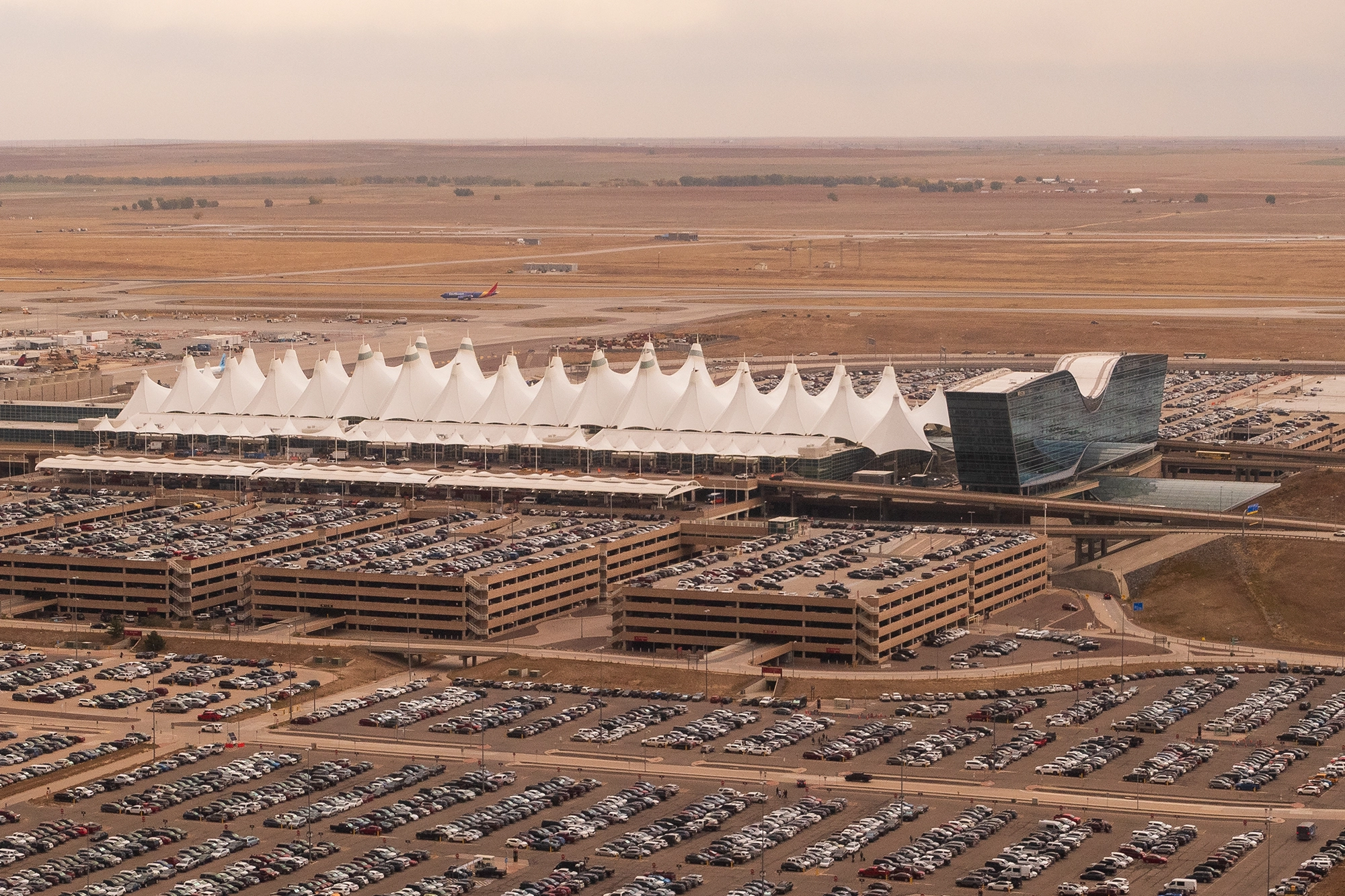
Frontier Flight 4345

Frontier Airline Jet Strikes Pedestrian at DIA

It’s been a bit over two months since the terrible incident at Denver International Airport on May 8. An individual breached airport security by climbing an 8-foot-high fence and walking onto runway 17L. Frontier Flight 4345 had begun its takeoff role and struck the man resulting in his death and a high-speed aborted takeoff. A brief engine fire and smoke in the cabin led the captain to initiate a ground evacuation of the passengers while on the runway. All 231 passengers and crew evacuated resulting in 12 minor injuries and five passengers transported to local hospitals.

DIA is the largest airport in the country with a 53 square mile footprint. This includes 36 miles of fencing, some 12 feet high, some 8 feet. Security personnel detected the intrusion and were responding to the scene. However, it was only two minutes between the breach and the collision and runway 17L is a long way from the terminal area. Denver is a Category X airport regarding TSA security requirements and a Class I airport regarding FAA Part 139 Safety and Security. These are the strictest airport requirements.

Since the accident there has been criticism of the airport security and even formal Notices of Claim filed against the City and County of Denver for negligence. Passengers are alleging smoke inhalation, physical injuries, and psychological trauma because of the accident.

This incident does bring up aviation security issues that are worth reviewing by the FAA and local airport authorities across the country. Some are legitimate concerns; some involve unrealistic security expectations. But learning from this is the primary goal. This time we escaped with no passenger fatalities and the crew did an excellent job of rejecting the takeoff and ordering a prompt evacuation. The security issues and general safety issues include:

  • How much time elapsed between the security team becoming aware of the breach and the collision? The man was detected by security systems, yet the tower was not informed in time to stop the Frontier takeoff. The long distance between the runway and the terminal made a physical intervention impossible in those two minutes but could ATC have been notified and a ground stop initiated?
  • The use of fencing is important in perimeter security. However, it is only intended to be a delaying technique. Any fence can be breached but it does slow down anyone intending to break in. Are there additional barriers that could be more secure and what is the potential benefit of more aggressive physical barriers? All questions that should be asked and evaluated.
  • DIA also has a Perimeter Intrusion Detection System (PIDS). This system monitors the fenceline and activates an alarm when it detects an intruder. It’s been reported that the system did detect an intruder, but the operator interpreted the alarm as caused by wildlife. This is a common occurrence as the airport is located adjacent to prairie lands. But clearly there is work to do involving personnel training and coordination.

Perhaps more important to the aviation safety system is the evaluation of how the emergency evacuation was conducted. As we’ve covered in previous stories, when passengers attempt to evacuate while carrying their bags, purses, and suitcases it endangers everyone else aboard the plane. The time it takes to retrieve personal items is time that other passengers may need to get out of the aircraft. Every passenger is put in jeopardy due to the selfishness of those who value their luggage more than the lives of others. This is not hyperbole; this is a factual evaluation of the situation. Videos online clearly show the multiple passengers carrying items down the slides. This also risks damage to the slide which in fact did happen to one of the slides that night. If your suitcase punctures a slide, that exit is now unusable for the remaining passengers. That’s simply inexcusable. Listen to flight attendants when they brief you prior to takeoff- “In the event of an evacuation, leave all personal belongings behind and follow crew instructions.”

We’ll leave you with clear FAA guidance regarding ground evacuation. Please read, understand, and follow these instructions should you find yourself in an emergency. Your life, and the lives of others depend on it.

  • LEAVE YOUR POSSESSIONS BEHIND.
  • Stay low.
  • Proceed to the nearest front or rear exit - count the rows between your seat and the exits.
  • Follow floor lighting to exit.
  • Jump feet first onto evacuation slide. Don't sit down to slide. Place arms across your chest, elbows in, and legs and feet together. Remove high-heeled shoes.
  • Exit the aircraft and clear the area.
  • Remain alert for emergency vehicles.
  • NEVER RETURN TO A BURNING AIRCRAFT.
IN THE NEWS
boeing in china
According to the President, China has agreed to buy 200 Boeing jets. No specifics were announced so it remains to be seen if this comes to fruition. Since Kelly Ortberg was part of the delegation that travelled to Beijing it might signal a shift from an Airbus preference to Boeing. It’s been over a decade since Boeing sold a jet to China. Boeing also just announced the opening of another MAX production line that will increase production to 47 jets per month. Boeing says it has fixed its safety and quality issues that led to the Alaska door plug blowout and the FAA seems to agree. Time will tell, but the MAX remains an airplane with dozens of documented design and manufacturing defects. Producing more jets with these serious flaws just doesn’t seem to be the right path for aviation safety. China must be okay with buying airplanes with dozens of problems that pose serious safety hazards.
737 Max Certification
Certification of the 737 MAX 7 and 10 appears to be on track for late 2026 with MAX 10 deliveries beginning in 2027. This certification required a redesign of the engine anti-ice system to prevent damage to the composite cowling. Reportedly this new system will be retrofitted to the MAX 8/9 fleet as well although completion will likely stretch to 2029 (makes the above story a bit more applicable). The MAX 10 is currently in FAA certification flight testing and certification for the new anti-icing design is happening in parallel. In a typical cart-before-the-horse routine, Boeing is building 737 MAX 10’s prior to a completed certification process. This includes some with finished paint for customers such as Air India Express.
777x Production
Along the same lines, the 777 X production line produced approximately 30 aircraft well before certification details were determined. These airplanes have been in storage at Payne Field, some for as long as seven years. Boeing has confirmed that these airplanes will require significant modifications. Ortberg described the work as “pretty massive activity” during a 2026 First Quarter Earnings call on April 22, 2026. The original delivery target dates for the 777X were in 2020 and have now slipped to at least 2027 costing Boeing nearly $15 billion.
sinkholes
Potholes on highways are one thing, but how about a sinkhole on a runway at a major airport? On May 20 a sinkhole was found adjacent to runway 4/22 at LaGuardia Airport. The runway was immediately closed for assessment and repairs. How often does this happen? It is not often a sinkhole appears; however, many airports across the world suffer from runway damage, settling, and the occasional sinkhole. The major culprit is unstable ground, usually because the airport was built on reclaimed swamp or large amounts of fill were brought in for construction. LaGuardia runway 4/22 was built before modern engineering standards using 1930’s fill. Other airports across the world are facing similar challenges. San Francisco International Airport is sinking at about 3/8” per year, Portland International at about half that rate. The winner worldwide is Kansai International Airport in Japan which has sank over 12 meters since opening in 1994. It is located on an artificial island built over extremely soft marine clay. Crumbling infrastructure is a persistent problem in the U.S. and that appears to include some major airports.
UPS Flight 2976
The two-day NTSB Investigative Hearing for the UPS Flight 2976 took place on May 19-20. The testimony reveals systematic failures involving the MD-11 engine pylon attachment hardware, Boeing’s extended inspection schedule (increasing the inspection of the pylon attachment to 29,200 cycles), and the feckless FAA oversight performance. Boeing identified bearing race failures in 2011 but determined there was no flight-safety risk. In a cruel twist of fate, the UPS 2976 crew changed aircraft due to a fuel leak on their original airplane. As we say so often, aviation is extremely unforgiving. This crew did everything they could do to save the aircraft but were let down by the system around them. Manufacturers, airlines, and regulators must be better.