HIGHLIGHTS



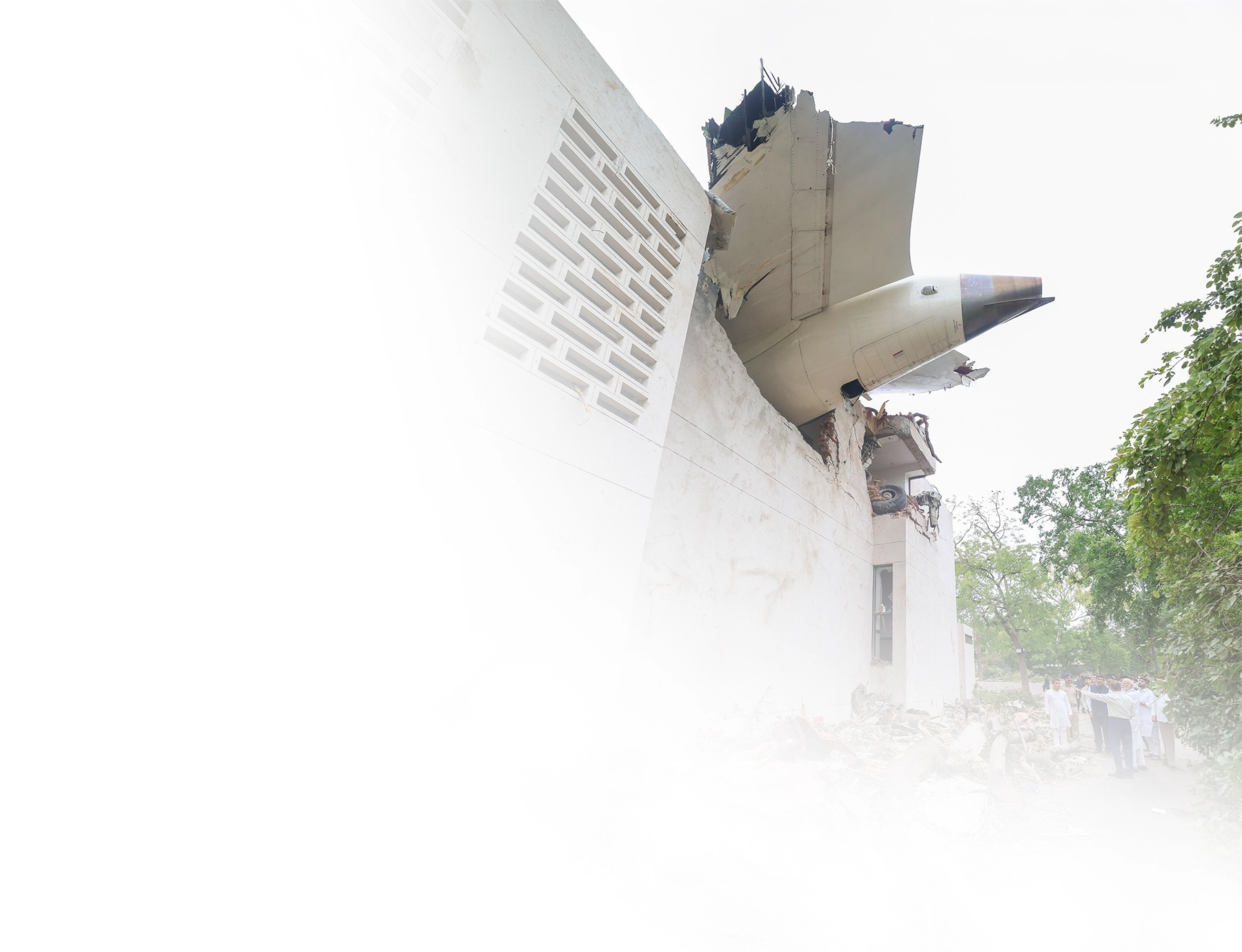
Welcome to another edition of the Aviation Watchdog Report. We are excited to announce the premier of STANDARDS, Air India 171, The Pattern Continues. This is our second episode in the series, and we take a deep dive into the AI 171 crash and the resulting investigation and controversy. As we recognize the one-year anniversary of the crash, the Foundation team interviewed dozens of people with varying perspectives including victims’ family members and those injured on the ground. Investigative journalists, Indian officials, attorneys, technical experts, and union representatives open up about their experiences dealing with this horrific crash, the investigation process, and the lack of transparency and support from Air India, the DGCA, and the AAIB. The comparison to the events that followed the 737 MAX crashes in 2018 and 2019 are striking. We hope you will watch this edition of STANDARDS as we all look for the truth surrounding this tragedy and processes to prevent it from happening again.
This month’s cover story involves accountability and how difficult it is to obtain after major disasters. Sadly, the justice that so many families look for, and deserve, after a tragedy rarely comes to fruition despite their courage and relentless pursuit. They become victims a second time as the system takes over to protect those individuals responsible. It’s a long and sordid story but one that can have a different future. Safety procedures and public policy are so important in making the national airspace system safer. The Foundation is determined to continue our work to prevent aviation accidents.
We also examine the FAA in several ways because they are the organization responsible for mandating regulation adherence across the industry. Be that in regulating drone activities, protecting airport perimeters, or in the certification of aircraft, the FAA must be more proactive in their mission. Reacting to tragedy is not the right thing to do and we call on the FAA to step up their enforcement efforts in all areas of aviation safety.
Thank you again for reading this edition of the Aviation Watchdog Report. Your support of our mission is vital. Reach out to us anytime at info@foundationforaviationsafety.org with any suggestions or comments regarding aviation safety and our mission to protect the flying public. Improvements can come through community involvement and government engagement and that can only be accomplished by all of us working together. Be safe out there.

History has shown that man-made disasters occur due to factors that are controllable with fundamental safety initiatives. Basic controls placed on production, maintenance, operations, and quality will do the job if implemented as intended. Therein lies the rub—those, dare we say, “common sense” steps are always available yet often not fully embraced. The failure to protect life and property is maddening to those who understand safety.
Examples of these tragedies are numerous and easy to find. They occur in all industries, not just aviation. But they all have common causes that start and end in a disregard for safety procedures. Instead, they feature a focus on expedience, convenience, profit, or a combination of all. Additionally, they all result in the loss of life and significant property damage yet in the end no one is held accountable. Here are a few examples to consider:
· March 25, 1911- The Triangle Shirtwaist Company fire. 146 people died as a fire spread through the 8th floor of the building. The shop was filled with cotton scraps and dust, exits were locked to prevent unauthorized breaks, and a flimsy fire escape collapsed. The owner was charged with manslaughter but acquitted and the company received more insurance money than the fire cost them.
· April 15, 1912- The HMS Titanic sinks after striking an iceberg. 1,500 lives lost. No one was charged criminally or held accountable. The British inquiry exonerated the White Star Line calling the sinking “an act of God.” The U.S. inquiry was harsher in its criticism, but no charges were filed.
· December 2, 1984- Union Carbide India Limited, Bhopal India. A chemical release that resulted in 3,000-5,000 immediate deaths with an estimated 15,000-25,000 deaths over the ensuing years. The causes included refrigeration systems shutdown to save money, non-functional safety systems, substandard maintenance, and employees were not trained in emergency response. Union Carbide settled with the Indian government, but no executive was charged. A few local managers were convicted of negligence in 2010 (yes, 26 years after the disaster), but none served significant prison time.
· April 20, 2010- Deepwater Horizon offshore oil drilling rig explosion and sinking. 11 workers died, 17 injured. This was the worst petroleum accident in history spilling an estimated 134 million gallons of oil into the ocean 40 miles from Louisiana. Several companies (BP, Halliburton, and Transocean) paid significant fines for environmental crimes, destroying evidence, and poor maintenance practices. BP also pleaded guilty to 11 counts of manslaughter; however, no individuals were ever prosecuted or imprisoned. Ironically, the Deepwater Horizon was being honored on the very night it exploded — and the specific award was the “Transocean Safety Award for Excellence.”
These are extraordinary examples of how people in charge are rarely, if ever, held accountable for their failure to protect employees, subcontractors, or end users. But certainly, aviation has a better record in this regard, right? Unfortunately, aviation has its share of tragedy with no individual accountability. Again, a few examples:
· 1954- Two in-flight breakups of de Havilland Comet jetliners resulted in 56 fatalities. The failures were caused by fatigue cracking of the fuselage originating from rivet holes and square corners from ADF window cutouts. The fuselage skin was made extremely thin to save weight. Despite clear design errors that resulted in fatal crashes no individuals at de Havilland or regulatory agencies were held accountable.
· 1972, 1974- Two DC-10 cargo door failures resulting in one serious incident and one crash, 346 fatalities. Several design problems contributed to the door failures including an outward opening door (that must resist pressurization forces), lightweight aluminum latching mechanism, and the door could appear locked when it wasn’t. After the first incident, the FAA accepted a McDonnell Douglas service bulletin for a recommended change rather than insisting on a design change. Then Turkish Airlines 981 crashed. McDonnell Douglas blamed ground crews and maintenance and had fought redesign until after the fatal crash. No executive was held responsible and only relatively small civil payments were made.
· 2018, 2019- Two new Boeing 737 MAX aircraft crashed resulting in the loss of 347 lives. Critical design and manufacturing errors involving AOA sensors and MCAS brought down the two planes. The FAA failed to act after the first crash despite knowing the aircraft had serious safety problems. Subsequent investigations determined there was a criminal coverup (Boeing pleaded guilty to defrauding the FAA) and recertification of the MAX was required. Despite the guilty plea the DOJ subsequently agreed to a non-prosecutorial agreement. No one at Boeing has been held accountable despite the significant loss of life. The MAX continues to fly with a long list of design and manufacturing defects.
There are many more examples, but the overall pattern is clear. Accountability is sacrificed to protect the system. These tragedies span over 100 years, yet the accountability failures are nearly identical. Unless the system is changed worldwide these shameful disasters will continue to happen with impunity. Civil settlements and reputational harm may occur but individuals who make decisions that result in tragedy will not be held responsible.
Corporations are protected in many ways. Responsibility is distributed throughout a large company with executives, managers, engineers, regulators, factory workers, and subcontractors all having a role to play. But this also makes it easy for those people to say, “it wasn’t my decision” or “I only played a minor role in a national project.” This makes it very hard to prove any criminal intent or individual negligence. In rare cases a CEO will take responsibility and may even be fired. But there will likely be no further consequences, and the golden parachute is often a staggering payoff.
Logically we should be able to depend upon regulatory agencies to ensure safety standards are met and these disasters are prevented. But that landscape is changing as regulators are relying more on the companies they regulate. In the case of the FAA, perhaps it simply does not have enough engineers, technical experts, or funding to regulate a large manufacturer such as Boeing. On the other hand, perhaps the FAA doesn’t have the strong leadership or the congressional support it needs to aggressively enforce the regulations. Boeing and the FAA have agreed that the Organization Designation Authorization (ODA) program is sufficient to ensure safety in design and manufacturing. Boeing selects the Authorized Representatives (AR) to act as FAA delegates. Although the FAA maintains certification authority, Boeing selects the ARs, they pay the ARs, and they have significant influence over the ARs. This is supposed to be a hybrid system, but it becomes something else. It’s not hard to imagine how the FAA’s oversight responsibilities can become diluted by corporate influence. This “regulatory capture” has got to be stopped.
These examples are systemic failures which our legal system is not designed to address. We have replaced individual accountability with civil settlements. Although these settlements can be significant, they pale in comparison to corporate earnings. A payment, no matter how large, does not qualify as justice. Additionally, most governments are hesitant to prosecute individuals or bring down companies because of economic pressures. Money talks—that’s a reality of the global system. It will always be louder than the individuals who have been harmed.
The aviation safety system is designed to prevent accidents and make system improvements should an accident occur. Investigations must be free from bias and individuals must be candid about the circumstances of the accident. A fear of prosecution could inhibit truthful testimony and interfere with the investigation process. This is a fundamental of all effective safety investigations and vital to success. Having said that, separate proceedings should occur that focus on accountability. But the legal system is not designed to punish those who caused the accident for the reasons stated above. This is the reality; it is certainly not a perfect system. In safety we are most interested in why a disaster occurred so corrective measures can be implemented. We focus on ensuring the same accident doesn’t happen again. That is the right thing to do, but even that has flaws. There were safety regulations in place that should have prevented the MAX disasters. Yet the system failed to prevent them from happening despite those regulations and decades of other safety improvements.
Organizations such as Boeing and the FAA are quick to say how aviation is the safest mode of transportation. The government points to the most comprehensive aircraft certification in history that allowed the MAX to return to operation 20 months after the second crash. Boeing stands by their aircraft and are excited to tell us how many new jets they have sold around the world. But for those who really pay attention, for those who really know the industry, we see a concerning trend that continues to risk the lives of those who fly. The FAA has failed in its job in too many ways to count. The list of design and manufacturing defects on both the 737 MAX and the 787 Dreamliner are staggering. Will chasing the dollar and placating industry ever be less important than safety?
The system can’t be changed overnight, but we can take steps that move it in the right direction. A focus on accident prevention would effectively eliminate the need for accountability. The FAA must take the responsibility of holding manufacturers responsible for designing and building safe airplanes and the airlines for safe operations. After all, this is their primary responsibility. Their mission statement reflects just that: “Our continuing mission is to provide the safest, most efficient aerospace system in the world.”
It is time to hold the FAA accountable. After the DCA mid-air collision the FAA admitted that multiple FAA failures were the proximate causes of the crash. Despite this, no individual FAA employee has been disciplined, terminated, or criminally charged, according to all available reporting. Once again, civil trials and the resulting monetary penalties will be the only justice for the victims and their families.
To the FAA we say no more noncompliance’s, no more exemptions. Enforce the regulations that are written in blood. Be proactive rather than reactive. Stop making assumptions and trusting that everyone truly holds safety as a top priority. That should start us down the right path. Along the way the FAA might even find a few individuals who are intentionally violating the law and hold them accountable.
Following the Air India 171 crash on June 12, 2025, the Indian authorities and Air India were quick to reassure the public that there was no indication of an aircraft systems failure. The Air India Boeing 787s were “inspected” and were deemed to be safe to fly. The natural question that followed was “what did they look for and how do they know the aircraft are safe?” No definitive answer was given but the narrative was planted—there’s nothing to see here, the Dreamliner can keep flying and Boeing can continue to promote how safe their airplanes are. Many across the industry were skeptical given the circumstances of the crash but those concerns were further dismissed a month later.
The Aircraft Accident Investigation Bureau (AAIB) issued a preliminary report 30 days after the crash. As has been well publicized, this report seemed to speculate on the cause of the crash. It appeared to indicate that one of the pilots intentionally moved the fuel cutoff switches from “run” to “cutoff.” However, the language was vague, and very few additional details were included. Although preliminary reports do not publish any conclusions or determine accident causes, this report made implications that can easily be taken out of context or interpreted in multiple ways. It was unprofessional at best, misleading and manipulative at worst.
In the months that have followed there has been significant pushback from the Indian public, crash victim families, the professional pilot unions, and from the Indian media at large. Deep criticism of the AAIB, Air India, and the Directorate General of Civil Aviation (DGCA) is common. The Foundation for Aviation Safety has been attempting to provide the AAIB with whistleblower documents that relate to the accident aircraft, VT-ANB, and its long history of electrical malfunctions including a major fire. After months of frustration, we have finally confirmed the AAIB is in possession of these documents. One can only hope they examine them carefully, identify the significant electrical system malfunctions, and evaluate how these could have led to a dual engine shutdown. The 787 electrical system is complex, and many safety advocates have proposed plausible explanations as to how this could happen. It is far more complicated than simply moving a switch to cutoff. If we consider the possibility that the pilots did not shutdown the engines, then we have to look for failure modes that could explain this accident.
Now another safety organization has issued an opinion piece that questions what happened to the aircraft and when it happened. The Safety Matters Foundation in India has published “A forensic reconstruction of the Ram Air Turbine deployment on Air India Flight 171.” This extensive study involved available photographic information paired with the flight data recorder data released by the AAIB in the preliminary report. Their conclusion is striking and poses serious questions about the 787 systems just after takeoff. The timeline is important and summarized below. If accurate, this timeline indicates the RAT deployed 2.5 seconds prior to the fuel cutoff switches transitioning. This would indicate that a catastrophic system failure began well before the fuel stopped flowing to the engines. Below is an excerpt from the analysis:
This investigation reveals the inherent problems with the international aircraft crash investigation process. The Indian government is responsible for investigating the crash but was also responsible for Air India maintenance. Boeing has a vested interest in deflecting any responsibility for the crash, yet they are technical advisors to the investigation. Information is controlled by a small group of individuals that inevitably have ulterior motives to steer investigations in their direction. As always, it becomes very easy to blame dead pilots and attempt to reassure the public that the airplanes are safe. This process seems to be drawing from the same playbook used after the MAX crashes. The similarities are striking as well as troubling.
The ICAO Annex 13 standards were written decades ago and, in this day and age, there is a better way to conduct investigations with integrity and expertise. The Foundation for Aviation Safety is actively exploring ideas that could provide a new system that would solve these insidious shortcomings. Reach out to us at info@foundationforaviationsafety.org if you’d like to join this effort.
info@foundationforaviationsafety.org
Media Inquiries: media@foundationforaviationsafety.org
1802 Vernon St NW #2213,
Washington, DC 20009
Copyright © 2026 The Foundation for Aviation Safety. All Rights Reserved.