Jail Time
Unruly passenger incidents are referred to the FBI when warranted and can earn you a felony conviction.




This month’s edition of the Watchdog Report includes several topics that highlight the need for aviation safety improvements and vigilance across all aspects of our national airspace system. Responsibility for safety ultimately falls to all individuals who work within the industry as well as those who depend upon it for reliable transportation.
The Army has completed its findings in the midair collision accident in Washington, DC. It tells the tale of systemic failures within the Army and FAA and how these shortcomings led to disaster. We also look at how the aerospace industry giants are advocating for a streamlined aircraft certification process. This seems to be greasing the slippery slope towards less oversight in favor of commercial success.
Conversely, we look at two issues that are largely individual behavioral topics that can be serious safety hazards. Disruptive passengers are not just a headache for those around them; they can cause serious injury and disruption for all passengers and airline operations. Lastly, flying with your cell phone, tablet, laptop, or portable chargers seem like a modern-day necessity. But we all must be mindful of the proper use and storage of these devices and the hazards posed by lithium-ion batteries.
Thank you for reading and for your interest in aviation safety. The Foundation for Aviation Safety is here to promote safety, keep the public informed, and hold our regulatory agencies accountable. We do this with no financial support from any aerospace manufacturers, airlines, or other entities with monetary interests in the national airspace system. We are independent and transparent. We welcome any questions or comments and certainly appreciate your support. The Foundation for Aviation Safety is a recognized Non-Profit 501c3 NGO (Non-Governmental Organization). See our Support Our Mission tab for more information on how you can help us continue our work.

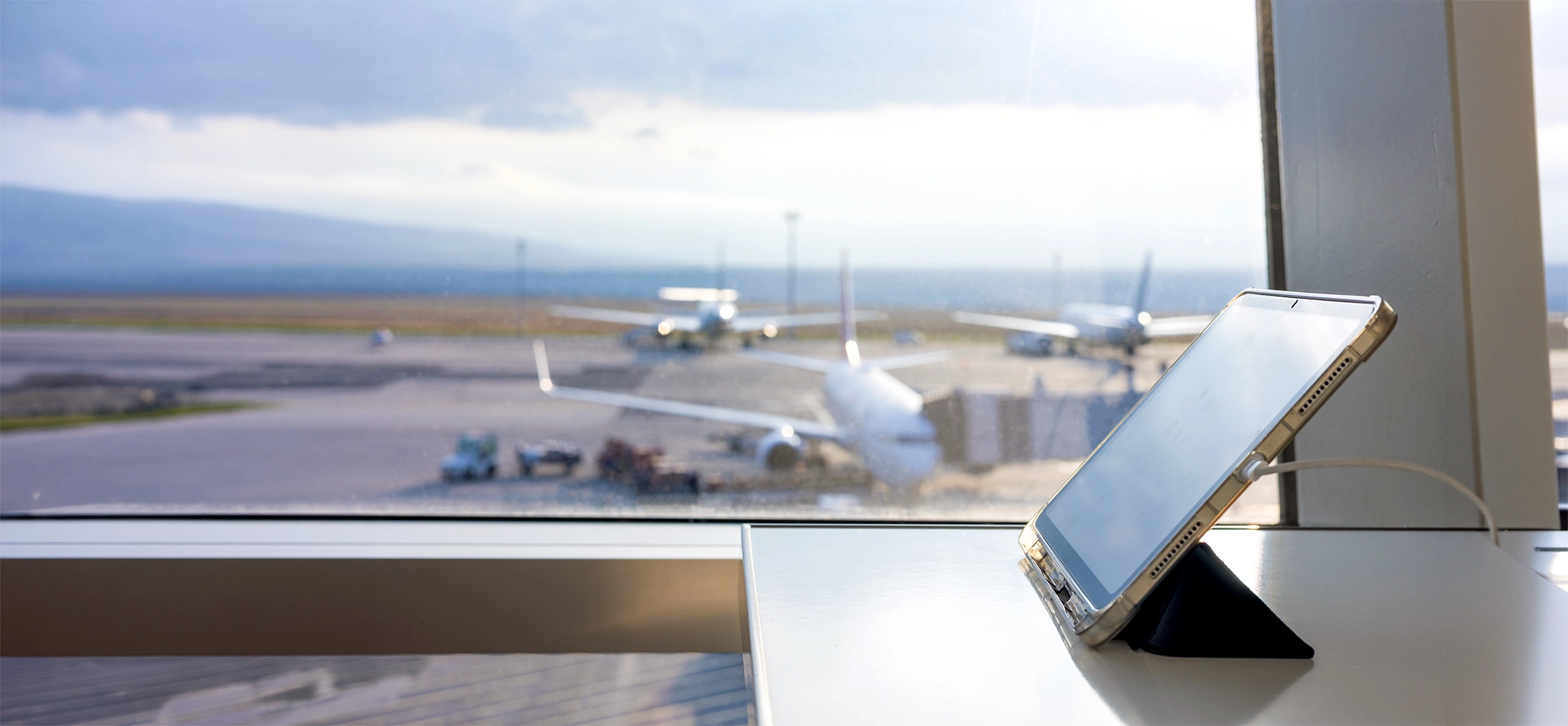
In the July Aviation Watchdog Report, we highlighted the safety concerns, regulatory requirements, and airline protocols related to using cell phones on commercial aircraft. If you missed that story, you can find it here. This month we explore the related subject of lithium-ion batteries and the significant hazards they pose when carried on airplanes. Give this some serious thought before you pack for your next flight.
Lithium‑ion batteries pose a unique hazard to aircraft because of how their chemistry behaves when something goes wrong. In normal operation, lithium ions move between the anode and cathode through a flammable organic electrolyte, all kept apart by a thin plastic separator. If the battery is damaged, overheated, improperly charged, or defective, that separator can fail and create an internal short. Once that happens, the cell dumps its stored energy as heat. As temperature rises past roughly 400–500°F, the electrolyte begins to break down into flammable gases, and the cathode materials start releasing oxygen. This combination of heat, fuel, and internally generated oxygen creates a self‑feeding chain reaction called thermal runaway, where the battery essentially becomes its own fire source. Temperatures can exceed 1,800°F, and the reaction can continue even if external flames are knocked down.
On an aircraft, these chemical behaviors become especially dangerous. Lithium batteries can ignite without warning, produce toxic smoke, and reignite after appearing extinguished. FAA guidance notes that lithium batteries “can act as ignition sources and potentially start onboard fires,” and that traditional extinguishing methods like halon only suppress flames temporarily—they do not stop thermal runaway. The FAA emphasizes that the real hazard is the battery’s internal chemistry: once runaway begins, the battery continues generating heat and oxygen until it is aggressively cooled with large amounts of water. This is why flight attendants are trained to use halon first (to knock down flames) and then apply water to cool the battery, followed by placing the device in a containment bag using protective gloves.
In the confined environment of an aircraft cabin, even a small lithium‑ion battery fire can fill the cabin with smoke, damage interior components, and force an emergency diversion. FAA safety alerts and advisories repeatedly highlight that lithium battery failures—though uncommon—carry severe consequences in flight because of the combination of high heat, flammable gases, toxic fumes, and the risk of reignition.
That risk was illustrated on October 11, 2026, when IndiGo Flight 6E 6115, traveling from Delhi to Chennai, was diverted to Hyderabad after smoke and flames were reported from a passenger’s electronic device in an overhead baggage compartment. News reports identified the device as a power bank, while IndiGo described it more generally as a customer’s personal electronic device. The cabin crew used onboard firefighting equipment to bring the incident under control, and the aircraft landed safely with no reported injuries; passengers later continued to Chennai on another aircraft. The incident underscores why lithium batteries must remain accessible and closely monitored in the cabin, rather than being placed out of sight in an overhead bin.
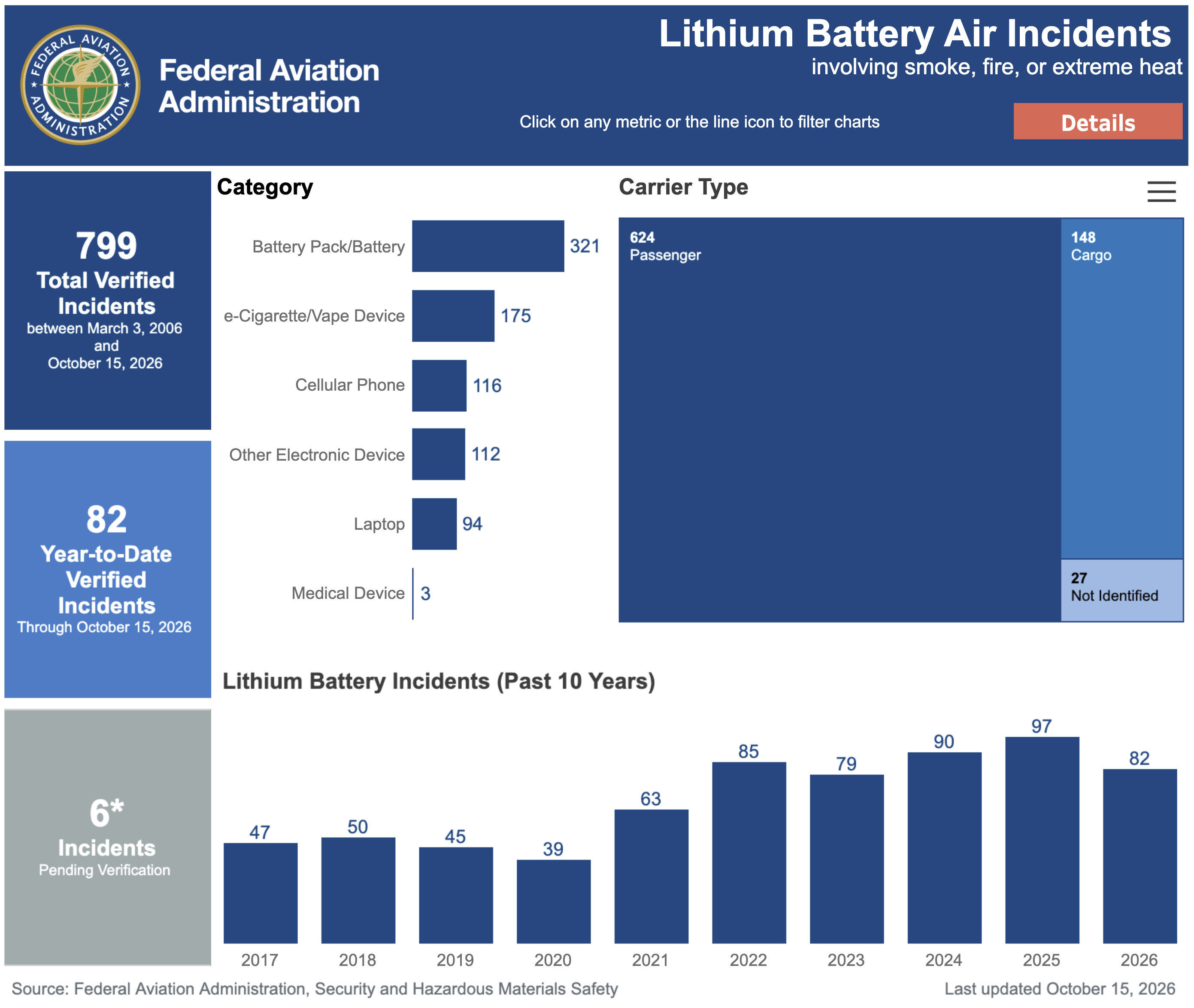
Incidents like the IndiGo incident are comparatively rare; however, overall incidents involving the overheating (minor to major, with/without resulting fire) are increasing in frequency. This is a logical result of the increasing number of devices carried aboard airliners. Incidents are nearly double the number seen 10 years ago. Roughly 40% of these incidents involved battery packs of some variety but cell phones, laptops, e-Cigarettes, and medical devices are also sources.
The FAA has established regulations that restrict personal electronic devices, how they are carried and stored, and how large the batteries can be. Importantly, individual airlines have also developed their own set of rules. This is allowed if their policies are more restrictive than the FAA regulations. Be sure to check your airline’s website for the rules that apply and plan your trip accordingly. Below is a comparison between the FAA regulations and typical airline policies to provide some basic guidance:
(Table scrolls horizontally on mobile)
The FAA maintains a Lithium Battery Resource page that includes passenger guidance, lithium battery risks, packing advice/requirements, safety videos, and FAQs for use by both aircrews and the flying public.
The good news is that flight attendants are trained to handle lithium‑battery overheating and fires as one of the most serious in‑flight hazards. Their procedures are standardized across FAA, ICAO, and airline‑specific safety manuals, and crews practice these scenarios in recurrent training every year. General guidance for air carriers is covered in AC 120-80B - Firefighting of General and High-Energy In-Flight Fires.
Flight attendants learn first to identify early signs of thermal runaway—hissing, popping, smoke, a sweet‑chemical odor, rapid device heating, or swelling. They are trained to immediately stop passengers from touching the device and to move other items away from it. The first action is always to knock down visible flames with a halon extinguisher, which interrupts combustion but does not cool the battery. Crews then transition to the critical second step: cooling the battery with large amounts of water or non‑alcoholic liquids. Flight attendants are taught to pour water continuously until the device is cold to the touch or until no further signs of heating occur.
Once the device is cooled, flight attendants use specialized equipment carried on nearly all U.S. commercial aircraft. This includes fire‑resistant protective gloves or mitts designed to handle extremely hot devices—often rated for temperatures exceeding 1,000°F—and lithium‑battery containment bags made of high‑temperature composite materials. These bags isolate smoke, heat, and any potential reignition for the remainder of the flight. Crews are trained to don gloves, carefully place the cooled device into the containment bag, seal it, and relocate it to a monitored area of the cabin. Some airlines also carry rigid containment boxes instead of bags, especially on long‑haul aircraft.
Training also covers passenger management, cabin communication, and coordination with the cockpit. Flight attendants practice smoke‑filled cabin scenarios, communication protocols (“battery fire,” “PED overheating”), and procedures for preparing the cabin in case the pilots decide to divert. They learn how to reassure passengers, relocate them if necessary, and maintain situational awareness while monitoring the contained device for signs of renewed heating.
Keep all of this in mind before you board your next airline flight. An onboard fire is one of the most serious hazards in aviation.
Lithium Battery Questions?
For questions about transporting lithium batteries by air you may contact the FAA Office of Hazardous Materials Safety via e-mail at hazmatinfo@faa.gov or via voice message at 405-954-0088. Please allow 1–2 business days for answers to questions.
Source: https://www.faa.gov/hazmat/resources/lithium_batteries
Whether you’ve seen the viral videos online or experienced it yourself, disruptive passengers have become an increasingly visible issue in commercial aviation.
Before looking at how these incidents are handled, it is important to understand what qualifies as disruptive behavior.
The International Civil Aviation Organization (ICAO), a specialized agency of the United Nations, defines a disruptive passenger as “[a] passenger who fails to respect the rules of conduct at an airport or on board an aircraft or to follow the instructions of the airport staff or crew members and thereby disturbs the good order and discipline at an airport or on board the aircraft." Put simply, someone whose behavior interferes with the safety and order of an airport or aircraft. ICAO further categorizes unruly passenger behavior into four levels based on the severity of the threat.
The lowest level of threat involves verbal disruption. This can include swearing or threatening passengers or crewmembers, as well as refusing to follow crew instructions.
For example, in 2023, a bachelor party caused chaos aboard a flight when they were told they would be unable to drink alcohol on board. Ultimately, the men were removed from the flight, delaying the flight three hours.
The second level involves physical aggression, such as hitting, grabbing, or spitting on another person.
In 2025, an unruly passenger aboard an American Airlines flight attempted to drag a flight attendant down the aisle after engaging in other disruptive behavior. The flight was forced to turn around as a result.
The third level involves behavior that could put someone’s life at risk, including serious violence or the display or use of a weapon.
In 2024, a passenger aboard an Alaska Airlines flight stabbed an off-duty law enforcement officer with an improvised weapon made from pens. The passenger ultimately pleaded guilty to assault with a dangerous weapon.
The most serious level involves an attempt to enter the flight crew compartment, commonly known as the cockpit.
For example, aboard a flight traveling to Washington, D.C., a passenger attempted to open the cockpit door. Cabin crew members were ultimately able to prevent the passenger from reaching the cockpit by using a beverage cart to block the area.
With safety and security among airlines’ top priorities, disruptive passengers can pose a serious threat to the aircraft, crew, and everyone onboard.
Over the past several years, disruptive passenger incidents have become increasingly common. According to the Federal Aviation Administration (FAA), reports increased dramatically in 2021, with nearly five times as many incidents reported that year as in 2020. Objections to COVID-19 mask requirements were identified as a key contributor to the rise.
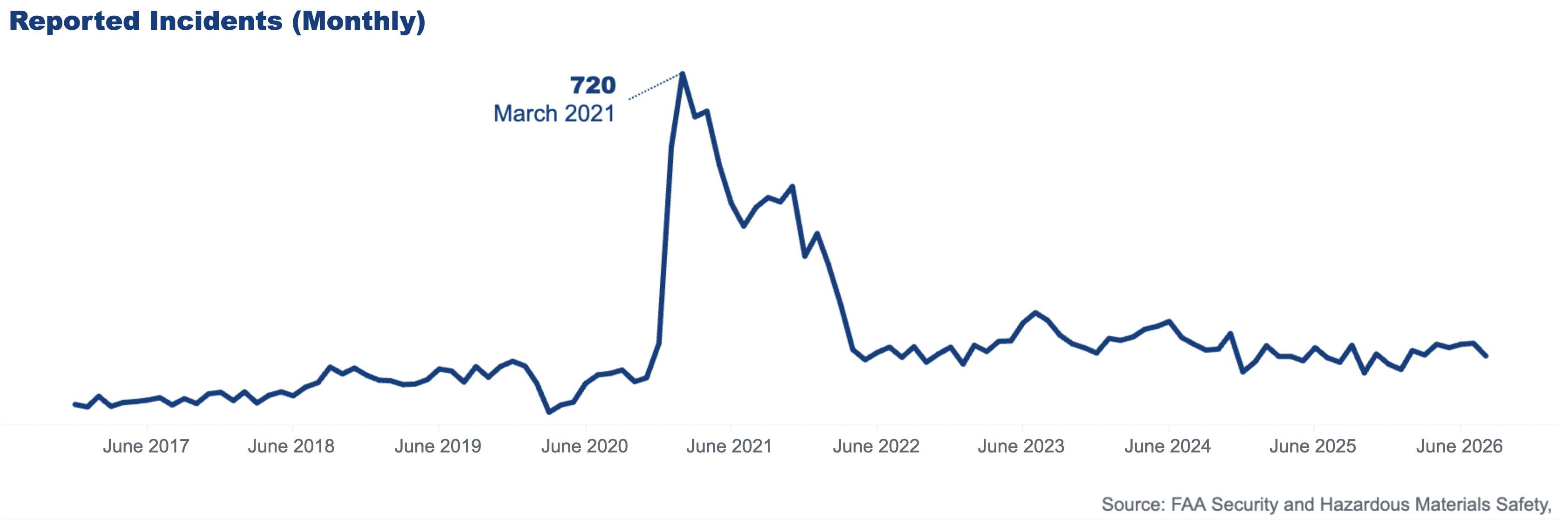
Although the number of reported incidents has declined from the 2021 spike, it has remained roughly twice the pre-pandemic level. So, while the initial rise has subsided, disruptive passenger behavior remains a significant issue for the aviation industry.
According to the FAA, as of August 16, 2026, the FAA has recorded 1,090 unruly passenger reports in 2026 alone. The FAA updates this number regularly.
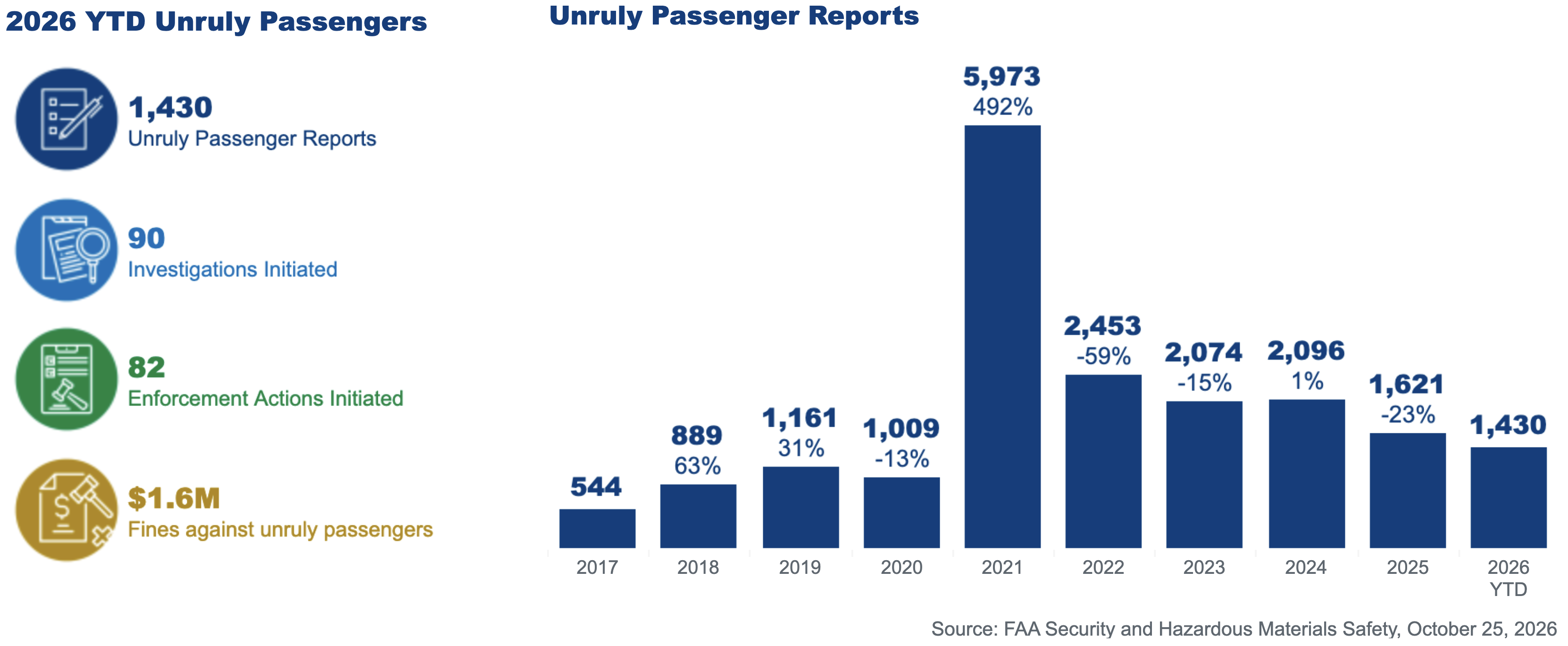
The FAA tracks reports of unruly-passenger incidents submitted by airline crews. It is important to note, however, that this database only includes incidents that are actually reported to the FAA. Because reporting is ultimately at the discretion of a crewmember or airline, the actual number of incidents may be even higher.
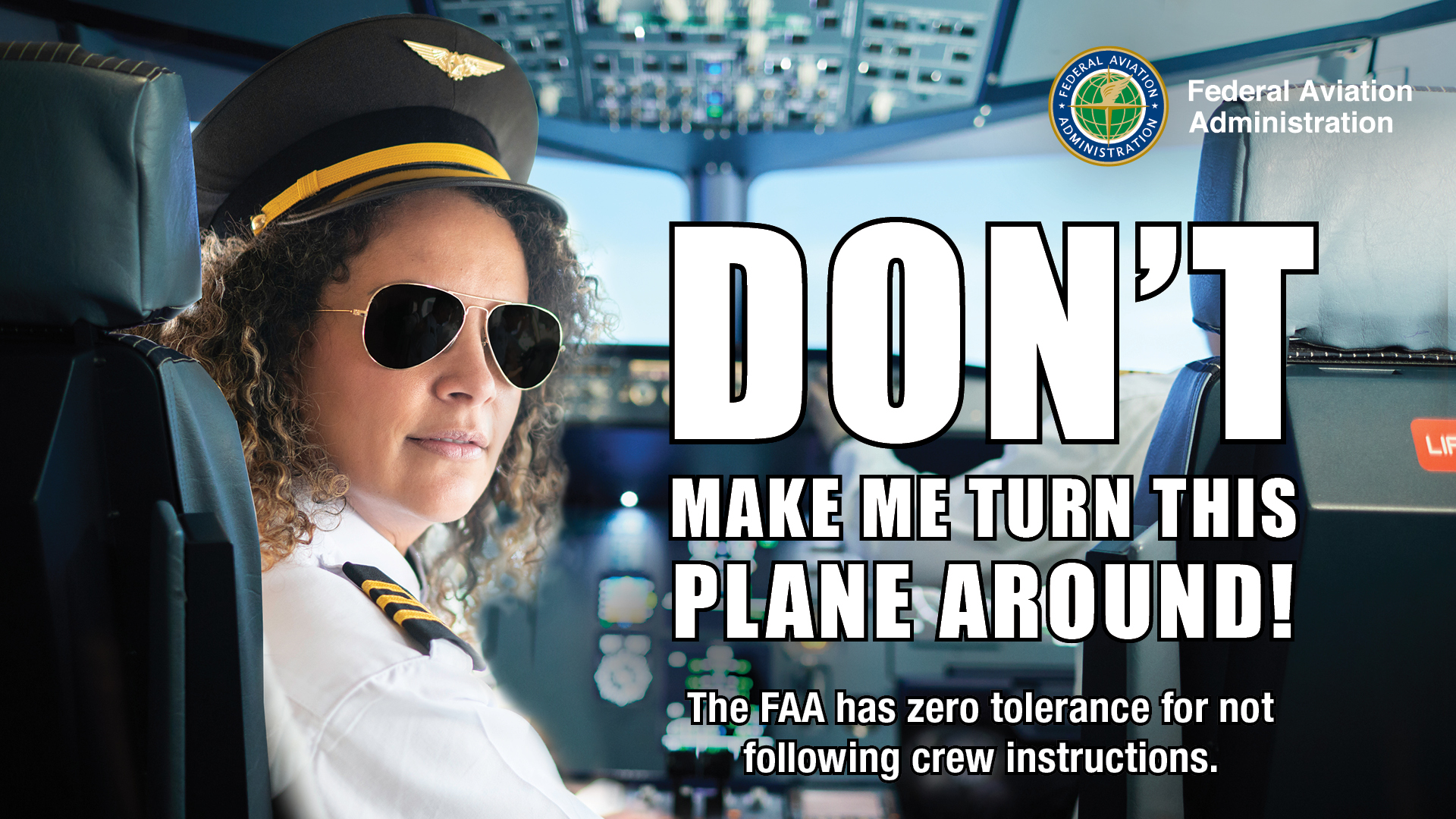
The FAA currently maintains a zero-tolerance policy toward unruly passenger behavior. In the past, the agency addressed these incidents through a variety of measures such as warnings or counseling, in addition to civil penalties. This approach has become significantly stricter in recent years.
In 2021, former FAA Administrator Steve Dickson signed an order directing a stronger legal enforcement policy toward unruly passengers. The order moved away from the previous practice and instead emphasized legal enforcement against passengers who assault, threaten, intimidate, or interfere with crew members. The FAA also routinely produces digital products to disseminate this zero-tolerance approach, an example of which is below.
Not every disagreement between a passenger and crew member results in criminal charges. Passengers may have disputes with crew members while boarding, waiting to take off, or during a flight, and many of these situations are resolved relatively uneventfully.
However, when a passenger’s behavior escalates to the point that it interferes with a crew member’s ability to perform their duties, the conduct can rise to the level of a federal crime.
Several federal laws and regulations prohibit passengers from interfering with flight and cabin crew members. For example, regulations including 14 C.F.R. § 91.11, 121.580, and 135.120, state that no person may assault, threaten, intimidate, or interfere with a crewmember’s duties.
When a disruptive passenger incident occurs, the airline can report it to the FAA. The FAA can then investigate the incident and determine what action is appropriate.
The FAA does not have the authority to bring criminal prosecutions itself. However, it can refer incidents to the FBI when warranted. The FBI can then review the case for potential criminal prosecution, which could lead to federal criminal charges and, depending on the offense and outcome, imprisonment.
While the FAA lacks criminal prosecutorial authority, it does have civil enforcement authority. This allows the agency to propose civil penalties up to $43,658 per violation, and a single incident can result in multiple violations and therefore multiple penalties. So far in 2026, reported incidents have resulted in approximately $1.4 million in proposed fines.
There is no single national no-fly list in the United States specifically for disruptive passenger behavior. Instead, individual airlines may maintain their own internal list of passengers who are prohibited from flying with that airline because of misconduct.
The United States is not the only nation that has rules in place governing disruptive passengers. International aviation law also provides a framework for dealing with unruly behavior onboard an aircraft.
One of the key agreements is the 1963 Tokyo Convention, an international treaty that makes it unlawful to commit acts that “may or do jeopardize the safety of the aircraft or of persons or property therein or which jeopardize good order and discipline on board.”
The Convention also gives the pilot in command authority to take reasonable measures to deal with disruptive passengers. This can include restraining a passenger when necessary to protect the safety of the aircraft and those onboard. The Convention also provides legal protections for the pilot, crew members, and others who take action in accordance with its provisions. Under Article 10, these individuals are generally protected from liability arising from the treatment of disruptive passengers, so long as their actions are consistent with the Convention.
However, the Tokyo Convention has historically contained a jurisdictional gap.
Under the Convention’s original framework, the country where an aircraft is registered generally has jurisdiction over offenses committed onboard. This creates complications on international flights, because the country where the aircraft lands may not have authority to address an incident that occurred aboard an aircraft registered in another country. For example, if a passenger becomes disruptive aboard a French-registered aircraft flying from Paris to New York City, the U.S. may have limited authority to act against that passenger once the aircraft lands. This can cause a gap that makes it difficult to hold unruly passengers accountable for their actions.
The Montreal Protocol of 2014 was created in part to address this problem. The protocol broadens jurisdiction by giving the state where the aircraft lands, as well as the state of the operator, greater authority to address unruly passenger incidents. This protocol was entered into force on January 1, 2020. The United States notably has not signed onto the protocol.
Although only a minority of passengers engage in disruptive behavior, those incidents have a disproportionate impact on everyone onboard. Even behavior that may initially seem relatively minor can create significant inconvenience and, depending on the circumstances, can threaten the safety and security of passengers and crew.
If a passenger becomes disruptive while the aircraft is still on the ground, the airline may decide to remove the passenger from the flight. While that may resolve the immediate situation, it can result in delays for everyone else onboard.
The consequences can be even greater once an aircraft is in the air.
A disruptive passenger may need to be physically restrained by crew members, and in more serious situations, the pilot may decide to divert the flight to another airport. An unscheduled landing can lead to significant delays, missed connections, and additional costs for airlines.
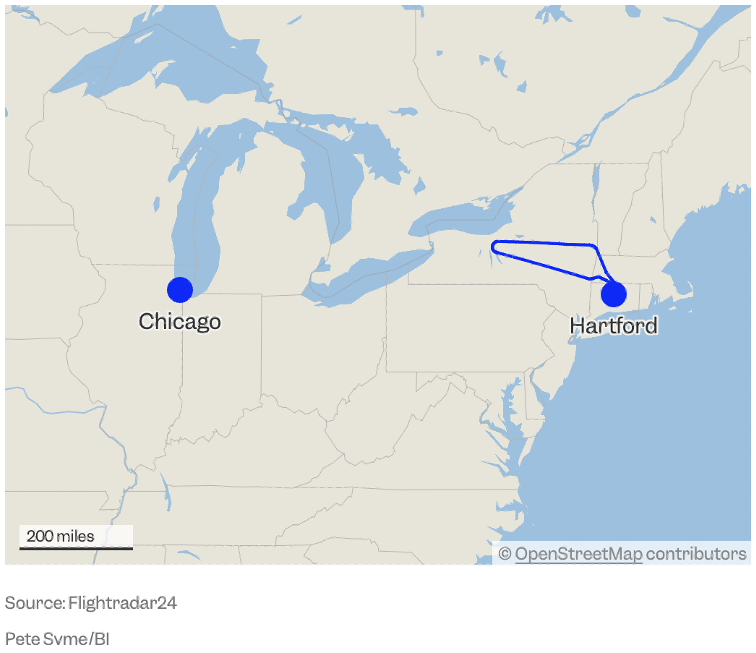
A single incident can also disrupt an airline’s larger operation. When a flight is diverted or significantly delayed, the aircraft may no longer be where the airline needs it to be for its next scheduled flight. Crew members can also be pushed past their legally permitted maximum duty hours, requiring the airline to find replacement crews.
What may begin as one passenger’s decision to behave disruptively can therefore create a chain reaction affecting hundreds of passengers, multiple flights, and broader airline operations.
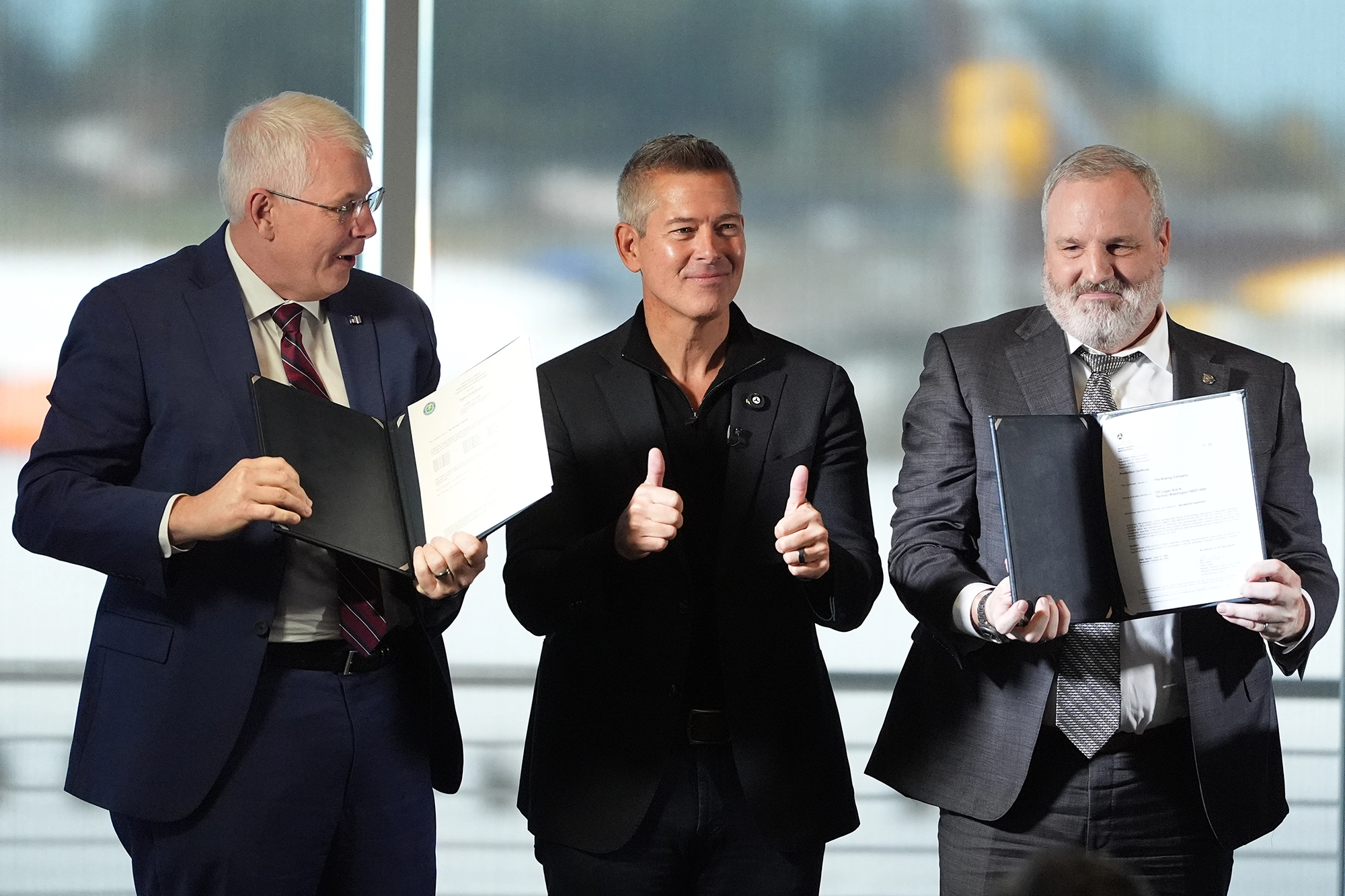
Discussions at a recent meeting in Savannah, Georgia between DOT, FAA, Boeing, GE, and RTX involved aircraft and aircraft component certification reform. This was not a public meeting and although specific details are not known, manufacturers are arguing for simpler processes thus shortening the time it takes to certify commercial aircraft. Secretary Duffy has also said that lengthy certification timelines can slow innovation and weaken the competitiveness of U.S. aerospace firms relative to foreign competitors, particularly China.
What seems to be missing from the public dialogue is that delays in the certification process are not exclusive to FAA requirements or other government red tape. In fact, history shows us that certification, even new clean sheet designs, can be completed efficiently when the manufacturer runs transparent operations and fully complies with all the federal regulations. The B-777 is a prime example as it moved from initial program launch in October 1990 to certification in April 1995.
In contrast, the B-777X will be in development for over 14 years before the design is fully certified. Blaming the FAA for this extended process is certainly the low-hanging fruit for Boeing; however, there are many good reasons the program has been delayed for so long. Initial structural concerns and flight control software problems have led to a myriad of design changes. Arguably, FAA scrutiny increased after the MAX disasters but that was a product of Boeing’s misleading, even fraudulent, activities related to the MCAS software design and implementation. Certainly, any regulatory increase was justified. Boeing had proven it could not be transparent with the FAA.
On the one hand, the FAA increased oversight at Boeing for a short time. On the other hand, the FAA is now rubber-stamping certification of the 737 MAX 7/10 aircraft despite the laundry list of known unsafe conditions that exist on those aircraft. It’s hard to imagine how the regulatory process can be streamlined when it isn’t even requiring manufacturers to correct serious safety hazards prior to model certification. The LRD activation that occurs with engine damage and/or severe vibration creates a significant safety hazard by dumping oil into the bleed air system prior to the bleed air valve closing. This makes cockpit or cabin air toxic within seconds. It has been over three years since this was made public by the Southwest Airlines incidents in New Orleans and Havana. The FAA justified the certification of the MAX 7 only by requiring an effective mitigation to the LRD design defect. That software fix is now forecast to be available sometime in 2028. That will be five years since the Southwest incidents. Yes, you read that correctly, FIVE years to implement a software fix. How can Boeing or GE complain about lengthy certification processes when they can’t even implement a software fix? The answer, as disappointing as it is, is simply that Boeing isn’t required to implement this fix prior to certification. The commercial sales figures and production schedule seem to be far more important than building safe airplanes and complying with all federal regulations. Seemingly, the FAA is bowing to industry pressure by certifying the MAX 7. It’s hard to understand why the FAA would be willing to streamline the certification process at all. The Foundation for Aviation Safety has long advocated for the correction of all known defects in all aircraft programs prior to certification. That is a fundamental process that has worked to improve safety for decades. Click here to read our most recent letter to the Senate Committee on Commerce, Science, and Transportation.
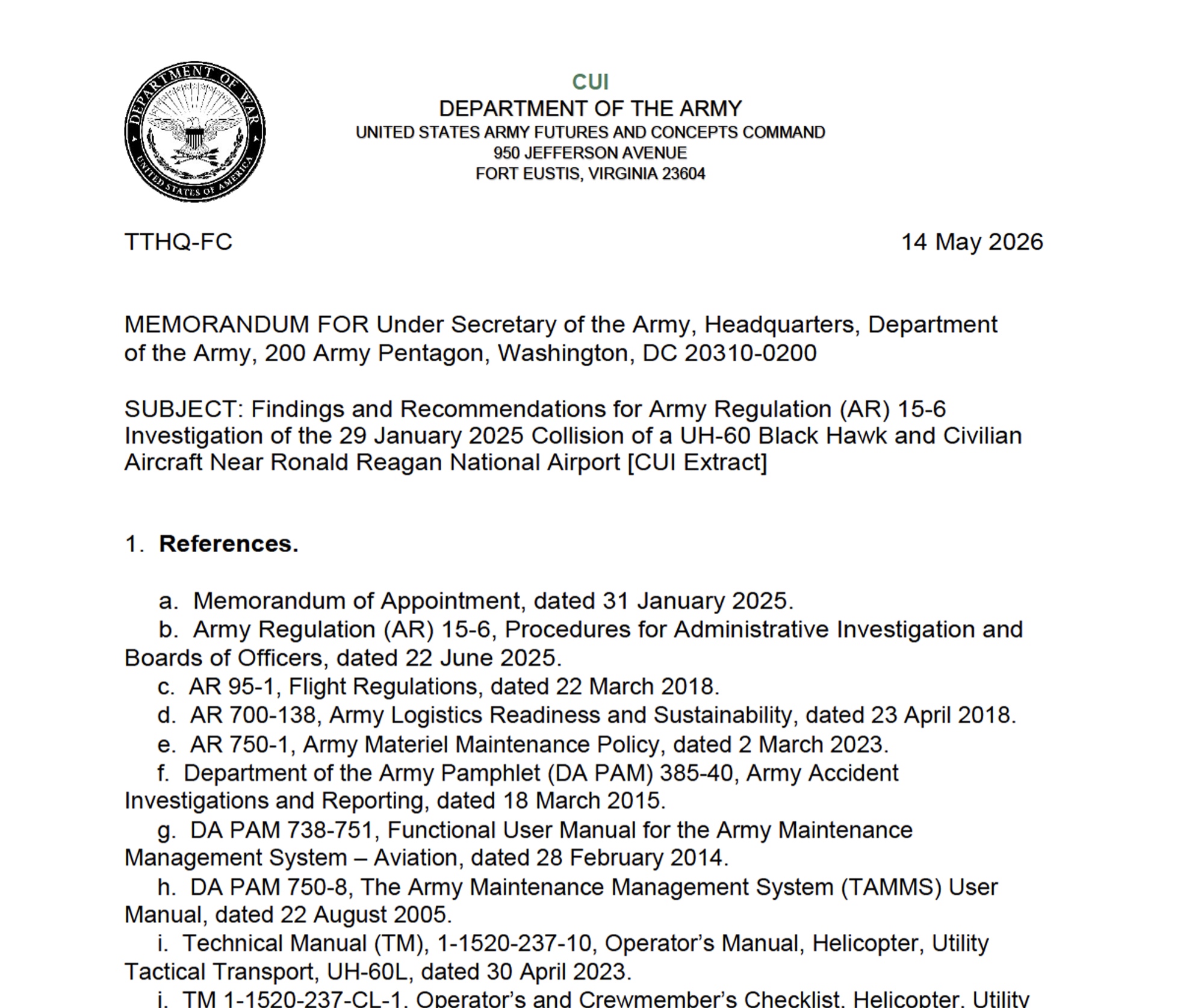
The U.S. Army has released its “Findings and Recommendations for Army Regulation (AR) 15-6 Investigation of the 29 January 2025 Collision of a UH-60 Black Hawk and Civilian Aircraft Near Ronald Reagan National Airport.” As stated in this document, “The purpose of the investigation was to determine the facts and circumstances surrounding the 29 January 2025 midair collision…” This report was completed in May and family members of the 67 people killed in the collision have been strongly advocating for its public release. Only after the Washington Post recently published excerpts did the entire report become publicly available at: https://foia.army.mil/. The report is also available on our website at this link.
Although the 50-page investigation does reveal some new information regarding the Black Hawk operations and equipment reliability, it is generally a recap of well publicized information and a concurrence with the NTSB findings. The Investigating Officer, Lieutenant General Michael McCurry, summarized the findings by stating, “In considering the circumstances and facts of this case, and consistent with NTSB findings, I have determined by a preponderance of the evidence that breakdowns across all layers of conflict management caused this accident.” Findings included:
This investigation concurs with the NTSB recommendations that the U.S. Army must implement and continue to grow as a learning organization and strengthen its safety culture.
As previously reported, the FAA has also accepted responsibility for failures that led to this crash. The FAA’s “Statements on Midair Collision at Reagan Washington National Airport” page describes the accident as a failure of FAA procedures and confirms that the agency took corrective action because its system “fell short.” These steps include:
The Foundation for Aviation Safety is hopeful that these actions taken by both the Army and the FAA will lead to safer operations at many of the nation’s airports, not just at DCA. These are significant improvements; however, they come only after a preventable tragedy occurred. These actions should have been taken before any loss of life as the warning signs were clear to anyone paying attention. With the technology and data analysis available today these foreseeable accidents should never occur.
Your trust in The Foundation for Aviation Safety is vital to our work – Thank you for standing with us in advocating for accountability, transparency, and safety in aviation. If you’ve set up a donor advised fund (DAF), we’re pleased to let you know that the Foundation is eligible to receive grants via that vehicle.
Here’s how you can direct your DAF to support us:
Thank you for reading the Aviation Watchdog Report. Your continued support for the Foundation and interest in aviation safety is vital to making the industry safer for everyone.
The Foundation for Aviation Safety Team

info@foundationforaviationsafety.org
Media Inquiries: media@foundationforaviationsafety.org
1802 Vernon St NW #2213,
Washington, DC 20009
Copyright © 2026 The Foundation for Aviation Safety. All Rights Reserved.